













 CCTV Camera
 Smart Door Lock

 GPS Tracker
 Network Switches
How thermal printers work?

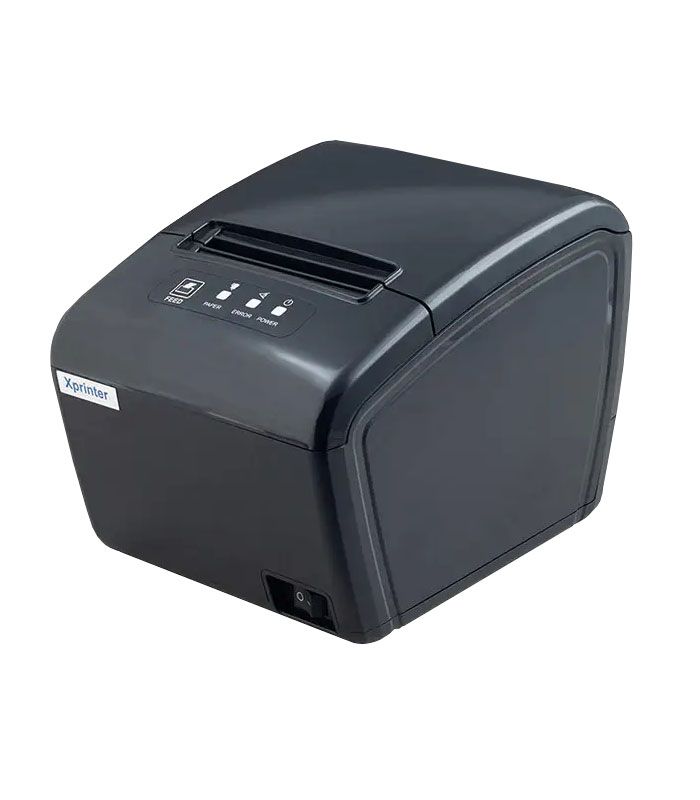
Thermal printers have quietly become essential in everyday business, handling everything from receipts and tickets to barcodes. Instead of using ink or toner like traditional printers, they rely on heat to create images. This allows them to print quickly, cleanly and consistently. In this article, we will look at the main parts of a thermal printer, the two primary types of thermal printing, how each one works and why this technology has become so widely used around the world.
The fundamental principle
All thermal printing relies on thermochromism, the property of substances to change color in response to temperature changes. The thermal printer converts a digital pattern into a physical pattern of heat. This heat is applied to a specialized medium that causes a chemical reaction which results in a sharp, visible mark.
Key Components of a Thermal Printer
A thermal printer contains three critical components:
- Thermal print head: It is a stationary strip that contains an array of tiny electrical heating elements or resistors. These elements are precisely controlled by the printer’s logic board. The resolution of the printer is often defined by the density of these elements. The print head is responsible for generating the heat required to create the image.
- Platen Roller: This is a rubber roller that rotates to move the paper through the printer. Its job is to press the thermal paper firmly against the thermal print head to ensure uniform contact and heat transfer.
- Controller Board: This is the brain that manages the process. It receives digital data from the connected device, processes the information into a bitmap image and translates that image into precise electrical pulses that activate the resistors on the thermal print head.
The two types of thermal printing
The term thermal printing covers two distinct technologies: Direct Thermal (DT) and Thermal Transfer (TT).
Direct Thermal (DT) Printing
Direct thermal is the most common and simplest form of thermal printing, best known for printing receipts at grocery stores and ATMs.
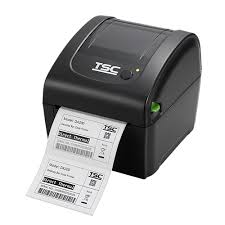
How Direct Thermal works
The entire mechanism is based on the single component of thermal paper.
https://www.zywell.net/theworkingprincipleofthermalprinters.html
- The medium: Direct thermal paper is coated with a thermochromic layer, which is a solid mixture of a dye and an acid.
The process:
- The printer’s controller board receives the print data.
- The thermal paper is fed between the print head and the platen roller.
- The controller board activates heating elements on the thermal print head.
- When the element heats up, it melts the solid matrix in that tiny spot on the paper’s coating.
- Melting the matrix allows the dye and the acid to mix, causing a chemical reaction that instantly results in a color change.
- The printed paper cools quickly and the chemical reaction results in a permanent, visible image.
- The “Inkless” Advantage: Direct thermal printing is truly inkless because the color-forming compound is already embedded in the paper itself. This makes the printers incredibly simple, quiet, and reliable due to the low number of moving parts.
- https://nepalbestdeals.com/product/alogic-ultra-mini-usb/
Direct Thermal applications and limitations
- Cost: They have a very low operating cost
- Speed: They are extremely fast since the heat application is immediate.
- Durability: The print fades over time and is highly sensitive to heat and light.
- Common uses: They are mostly used for parking tickets, shipping labels, temporary wristbands, etc.
2. Thermal Transfer (TT) Printing
This type of printing is used for applications that require high print durability and longevity.

How Thermal Transfer works
Thermal Transfer printing requires an extra consumable: a thermal transfer ribbon.
https://www.ronsutech.com/how-does-a-thermal-transfer-printer-work/
- The Medium: The print surface is often standard paper, polyester or other synthetic materials.
The process:
- The printer receives data and the label is positioned with the ink ribbon lying over it.
- The activated heating elements on the print head apply heat to the back of the thermal transfer ribbon.
- The heat melts the wax on the ribbon in the exact spot, causing it to transfer.
- The Durability Factor: Because the ink is a separate, robust material (especially resin-based ink), the resulting print is significantly more resistant to abrasion, moisture, chemicals, and UV light than direct thermal prints.
Thermal Transfer applications and limitations
- Cost: They have a higher operating cost due to the required thermal ribbon.
- Speed: They are slightly slower than Direct Thermal due to the mechanism.
- Durability: The print is long-lasting that is resistant to extreme temperatures and fading.
- Common uses: They are used for industrial barcodes, laboratory specimen labels, etc.
Thermal vs Impact printing
| Features | Thermal Printer | Impact Printer |
| Mechanism | Print head applies heat. | Pins strike a ribbon against the paper. |
| Speed | Prints an entire line of dots with a fixed print head with great speed. | Print head must move back and forth to form characters making it slow. |
| Noise | Since no moving parts physically strike the paper, it is silent. | It is loud due to the striking pins that generate noise. |
| Consumables | It requires special paper or ribbon. | It requires standard paper, ink and ribbon. |
Advantages and Applications of Thermal Printing
The simple, heat-based operation gives thermal printers a host of strategic advantages in specific sectors:
- Compact Size: Thermal printers are more reliable and require minimal maintenance, primarily limited to cleaning the print head.
- High-Quality Barcodes: The lack of complex, noisy mechanisms make them ideal for mobile devices and embedded solutions.
- Environmental Resilience (TT): Thermal printing produces sharp, high-contrast images, which is essential for printing barcodes and QR codes.
- Reliability and Low Maintenance: With far fewer moving parts than an inkjet or dot matrix printer (no print head carriages, no ink pumps, no ink spray nozzles), thermal printers are inherently more reliable and require minimal maintenance, primarily limited to cleaning the print head.
In short, thermal printers have reshaped the way businesses handle printing tasks by offering a fast, dependable, and mostly ink-free solution that meets the need for quick, scannable, and sometimes long-lasting prints. Choosing between Direct Thermal and Thermal Transfer mainly depends on how long the print needs to last and how durable it has to be.
Conclusion
Thermal printers use heat instead of ink to produce fast, clean, and reliable prints. Through Direct Thermal and Thermal Transfer technologies, they support both short-term and long-lasting printing needs. Their speed, low maintenance, and ability to create clear, scannable images make them an essential tool in retail, logistics, healthcare, and industrial environments.
